

THERAPY FOR ANXIETY & OTHER STRESSORS
A space to pause, understand what feels overwhelming, and develop ways to handle stress with greater ease and awareness.

Anxiety is a natural response to stress, but when it becomes constant or overwhelming, it can affect both the body and mind. It may begin as tension or racing thoughts and build into panic or overthinking. Generalized Anxiety Disorder often involves persistent worry and avoidance.
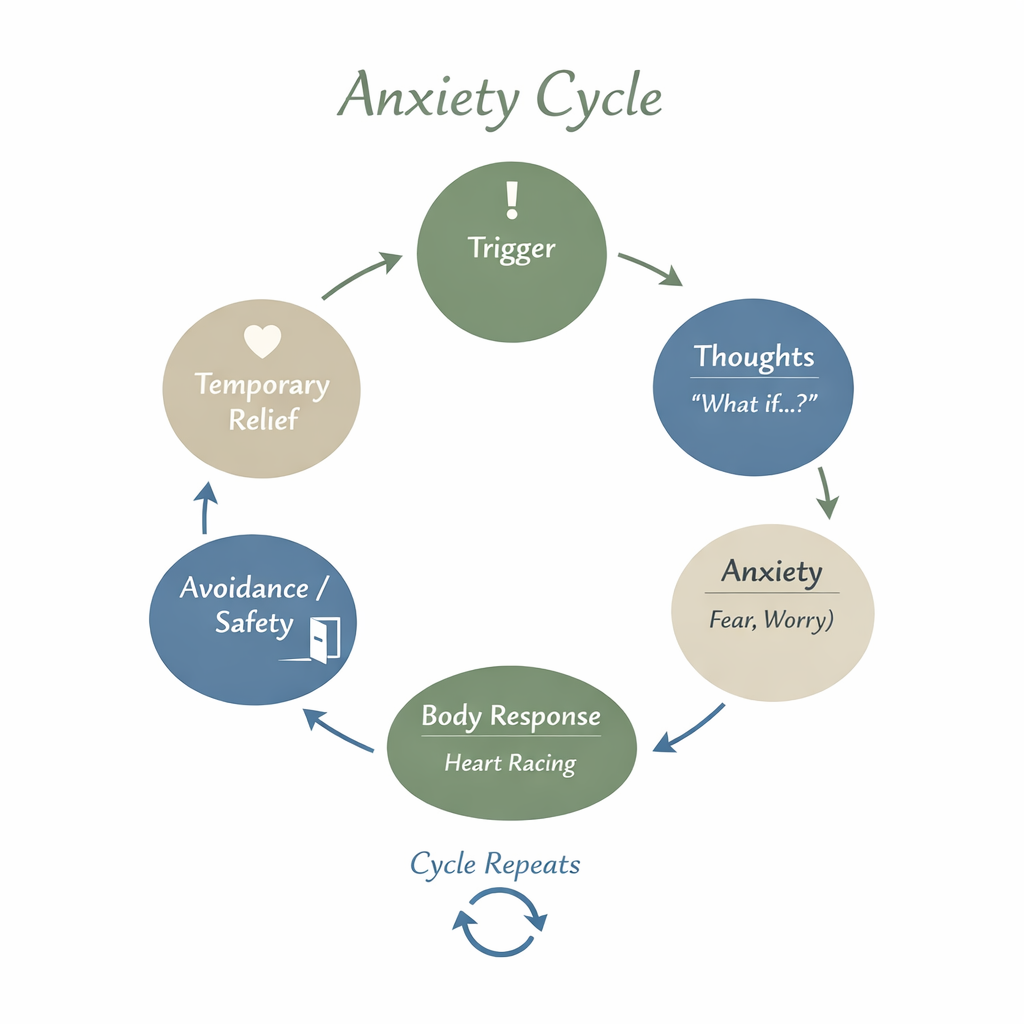
Therapy focuses on understanding the anxiety cycle, recognizing early signals, and regulating the nervous system. Using evidence-based approaches, support helps shift thought patterns, improve emotional balance, and build resilience, leading to greater stability and confidence in daily life.
Panic Attacks
Panic attacks are sudden, intense surges of fear that can happen without warning, often with no clear trigger. Your body’s alarm system goes into overdrive, creating powerful physical and emotional symptoms that can feel frightening and out of control. Many people describe them as feeling like a heart attack, losing control, or even dying. Although panic attacks usually peak within minutes, the fear of having another one can linger and keep anxiety alive.


Common Symptoms:
– Rapid heartbeat or palpitations
– Shortness of breath or choking sensations
– Chest pain or tightness
– Dizziness or feeling faint
– Sweating, trembling, or shaking
– Nausea or stomach discomfort
– A sense of doom, detachment, or loss of control
Treatment That Works:
At Katy Mosaic Integrative, therapy is personalized and evidence-based to help you understand what is happening in your body and mind, interrupt the panic cycle, and feel safe again. Panic attacks can disrupt daily life and lead to avoidance or constant worry.
Using approaches such as CBT, DBT, and mindfulness-based strategies, I help you:
– Recognize early warning signs
– Calm your nervous system in the moment
– Reduce fear of physical sensations
– Strengthen coping skills
– Return to daily activities without avoidance
Relief is possible, and support is available.
Generalized Anxiety Disorder
Overwhelmed by Constant Worry?
If your mind rarely feels quiet and is filled with constant worry or “what-ifs,” it may be more than everyday stress. Generalized Anxiety Disorder can make daily life feel heavy and exhausting. At Katy Mosaic, therapy offers compassionate support to understand anxiety and feel more grounded. Avoidance may feel protective, but it can keep you stuck. Treatment helps rebuild confidence, reduce overwhelm, and respond to stress differently. The goal is to restore a sense of calm, safety, and control in everyday life.
What Is Generalized Anxiety Disorder (GAD)?
Generalized Anxiety Disorder (GAD) is more than occasional worry. It is a persistent pattern of excessive anxiety that can affect relationships, sleep, concentration, physical health, and overall well-being.
People experiencing generalized anxiety symptoms often report feeling:
A. Constantly on edge or unable to relax
B. Restless, tense, or easily irritated
C. Mentally drained from nonstop worry
D. Overwhelmed by daily responsibilities
E. Unable to enjoy calm or present moments
With Generalized Anxiety Disorder, worry often moves from one topic to another, such as health, finances, safety, work, or relationships, and does not fully ease even when things are going well. This ongoing cycle of anxiety can feel exhausting, isolating, and hard to manage alone.
How Generalized Anxiety Treatment Can Help
Through evidence-based generalized anxiety treatment at Katy Mosaic, you can learn practical, lifelong skills to:
A. Understand your anxiety patterns
B. Reduce constant worry
C. Calm your nervous system
D. Improve sleep and focus
E. Strengthen emotional resilience
F. Feel more present and in control
Therapy provides a safe, supportive space where you can explore your anxiety without judgment and build tools that serve you long after therapy ends.
What is Obsessive-Compulsive Disorder?
Obsessive-Compulsive Disorder (OCD) involves intrusive, unwanted thoughts (obsessions) and repetitive behaviors or mental rituals (compulsions) aimed at reducing anxiety or preventing feared outcomes.
While these actions may bring temporary relief, the anxiety often returns stronger, creating a distressing cycle. Over time, OCD can leave adults feeling overwhelmed, stuck, and mentally exhausted, affecting work, relationships, and daily functioning.
OCD is not simply about being organized or detail-oriented. It often includes intrusive fears, repetitive behaviors, mental rituals, avoidance, and difficulty staying present.
At Katy Mosaic Integrative, therapy focuses on helping you understand these patterns, respond differently to intrusive thoughts, reduce compulsions, and rebuild a sense of calm, control, and confidence.
Common signs of OCD in adults include:
1. Intrusive thoughts about contamination, harm, safety, or morality
2. Repetitive behaviors such as excessive cleaning, checking, or ordering
3. Mental rituals like counting, repeating phrases, or silent reassurance
4. Avoiding situations, people, or places that trigger obsessive thoughts
5. Difficulty focusing at work or being fully present in relationships
6. Distress over thoughts that feel unwanted, upsetting, or out of alignment with your values
Even when you know these thoughts aren’t logical, OCD can still feel impossible to stop on your own.
Therapy helps you respond differently to intrusive thoughts, reduce compulsive behaviors, and rebuild trust in your mind and body.

